Showing posts with label Historical Fashion. Show all posts

Sunday, December 28, 2025


12/28/2025

A Year in Her Life


Hello to everyone who has read this blog over time.  The last three years have been challenging with health and Hurricane Helene.  But this year I tried to do something I loved while working on those things that were trying every ounce of me.  And here we are all happy and accomplished. 


Today I am discussing my little fave of A Cathy Hansen Bru.  She is discussed more fully here:  Time for a Project

Her undergarments here: A Show and Tell Today

I had a head start in getting her dressed.  The riding habit by the late Susan Sirkis is where I began.  She was a wonderful pattern maker and doll costumer.  I have never gone wrong with her work.  I was confused about the construction of the jacket for this and thus have three of them.  One was a test for the fabric and lining, one second idea for the lining and a third with yet another way to line the tails.  I felt challenged by them, but like all three jackets.  I did the skirt but due to the weight of my fabric, (a fine wool crepe), that I made a hem facing of a lighter fabric. Also, the lining fabric was used on one set of tails for the jacket.  The garment fit so very well.  I made a riding hat for her and another fancy hat of the same fabric.


Riding Habit and Extra Hat

I wanted to make her an 1860s style dress, and was really inspired by a gown found on Pinterest.  I had a pretty miniature Royal Stewart plaid in navy and thought it would be great to use.  I only had 1/4 yard and had to think through the project.

And her beginnings of her costume and sewing here: Sewing for Marie Louise

 The more I worked the more I wanted.  I made her a jacket and a Spanish jacket of red with black beading. I leaned some new things and wish I had known before starting but am pleased with her all the same.  I was inspired by a French Fashion that had a wardrobe of blouses, and since I was in the using up scraps mode, created three white blouses and a blue checked blouse for her.  


Skirt and Extras


 Not to be outdone, she needed a bodice for a ball.  Ladies of the era often had a walking costume that had a matching jacket and a ball bodice made as well giving more usefulness of the skirts.  I did this and made some dancing slippers and a pretty floral headdress to go with it.  She has fans as well but I haven’t made one of enamel yet.  That will be a lovely project when I get to it. 


Today I am ending with a complete picture of her wardrobe and belongings that has taken me this full year to work, make and enjoy!  I do hope you have enjoyed seeing her and have plans to create more your doll, too!

In the meantime,

Have Fun, Kathi


Wednesday, November 4, 2020

Bridal Challenge - The Dress and Veil


Wow, this was challenging!  There were several iterations for the bodice, first in paper, then muslin, and then muslin again.  I should have made a fourth, but I was too lazy.  After the third, I marked a place to make an adjustment on the pattern and then went with it.  According to Mr. Burbidge’s article in Doll Reader, his reproduction dress was of bridal satin of silk/rayon in antique ivory.  The bodice had two layers of lining, one of organdy and one of cotton gauze. 


For my doll, I had selected silk/satin or charmeuse.  Charmeuse is not a particularly easy fabric with which to work.  I also selected beaded and sequined netting as I did not really want to do all the beading and embroidery of the original dress or the reproduction dress. Once I had all the pattern pieces for the bodice and skirt drafted and ready to cut, I started second-guessing all my decisions.  Yes, ALL of them!  I was afraid the silk for the slip would tear, I was afraid I couldn’t do the sewing on the charmeuse as it is a tricky fabric, and I didn’t know if the beaded net would be too much and look all wrong.  I was at a dead stop.  

Two weeks had passed since I wrote the above paragraph. Here is where I am, I used the charmeuse, yes, I did.  I would not suggest it unless one has superior sewing skills.  I am not that person, but I had to soldier on.  I went back to the article to see what Mr. Burgess used and decided to ADD the extra layer of cotton for the bodice.  I thought the scale of it would not work, but even in a smaller doll, this is a good idea, using Swiss Batiste, Silk organdy, and silk charmeuse.  The pieces were basted together and treated each as one section of the bodice then sewn together on the machine. 


I made the skirt in three pieces as well only joining them at the end at the waistline. 


The veil is lace with attached silk netting.  It, too, will be, or maybe embellished with beads, sequins, and crystals.


Today, as of this writing.  I have not yet completed this dress.  It has lain packed away for a few years. The truth is that Mr. Burbidge has died but was able to send him pictures of the dress this far.   I have lost all verve for this project.  However, the train is completed as a separate piece, if I pick it up again, will be attached via hooks and loops at the center back.  And then all that is left is beading, sequins, crystals, and whatever else I want to make it fussier and a real wedding dress. 


Remember my doll is a doll of the period of the late 1800s, so it is out of context in this 20th century dress.  But the project was fun, and I was thrilled to be able to work with my sewing idol.  He was one of the highlights of my sewing career. 


A special note.  I may be off the blog for a few weeks as I complete two projects, impossibly with the same deadline. I appreciate your patience.  Hope and joy to all.  Happy Thanksgiving to you, too. 

Wednesday, October 7, 2020

Bridal Challenge


I have a project I would like to tell you about, but it is anachronistic and I do not want my purist friends to go crazy.  I mean I would not do this unless there was a real reason for the project and there is a reason.  This is a story of six degrees of separation.  A friend of mine, Nancy, is a friend of someone I idolize, the late Mr. John Burbidge.  (Les Petites Dames des Modes see previous post:

http://creativedoll.blogspot.com/2008/02/who-is-john-burbidge.html)  

I talked and talked about him when we had a chance.  One day she let the bomb drop.  I know him, you know.  My jaw dropped.  I asked her a billion questions.   My friend Nancy was the hairdresser for his Little Ladies.  She wigged and styled each one.  I was flabbergasted but fascinated as well.  How had I not known about this?  We had known each other for years.  

      One day I answered the phone and Mr. Burbidge was on the other line.  He said, “Hi, Kathi, this is John Burbidge, I understand you like my work!”  My response?  “Oh! Hi!  Uh, wait a minute, I have to sit down!”  Well, we had the best conversation in the whole world.  It was wonderful.  We talked about pattern making, methods of making them, design and interpretation and so many other things.  30 minutes later, I was out of the house on my way to an appointment and calling my husband.  I think I was hyperventilating.     

      Well a few days later, a package arrived in the mail and he had sent me a kind note and a copy of a pattern he created for Doll Reader magazine in 1987.  He made a replica of Sarah Ferguson’s wedding gown worn for her marriage to Prince Andrew.  In our conversation, I wondered if I could execute one of his patterns knowing adjustments for size and scale could be difficult.  That was my challenge; make the dress, anyway I wanted on a smaller scale than his 30” mannequins, and to make it not the same, that is to say, to use the basics and create something different.  

I chose three dolls that were in miniature scales and from those three I would choose one for which to make this dress.  

      Dear purist friends this is where we might part ways, but I will go back to era-correct soon.  I promise.  The figure is an antique reproduction created by Alice Leverett called the Ultimate Fashion Doll™, (www.justalice.com) my favorite doll and my “play doll”.  She is the doll for which I create just for me. 

(Note: Ultimate Fashion Dolls are no longer in production) 

      I am following the patterns (there are no construction directions) and creating a different “modern” wedding gown based on the pattern, but having to think about things such as pattern design, fitting, scale, fabrics, etc.  My hope is to share this project with you as I go along.  

      Please forgive me using my wonderful antique reproduction as a modern gown mannequin, but I have not another doll this size.  (Emilie Claire is off with Ian, doing who knows what, but never mind she is a reproduction, too.)  

My three choices were a Franklin Mint wedding doll.  (At least I think it was Franklin Mint.  She is quite pretty, and I play with her a bit.) She is however meant to be either a 1980s doll when the Peter Fox wedding boot was popular or more of a Belle Epoch bride doll.  She has a pretty face and body, lots of potential with her.  The middle doll is the Alice Leverette Ultimate Fashion doll.  And the far right is a Robert Tonner Tiny Kitty.  Though she is more contemporary in style and appearance I felt I could better use the size and scale of the 12” Ultimate Fashion Doll.  I may yet make one for Tiny Kitty as well.  I do not know. 


Coming up:  We will see her contemporary undergarments, progression on the dress, and maybe an accessory or two.  

As always, 
Have Fun!
Kathi

Friday, October 30, 2015

Tiny Kitty Returns!


As promised I am back again working on Tiny Kitty and her new cotton dress.  Thought I would share the inspiration dress with you so here it is. 


1910


While figuring out the pattern, I had been diligently looking for my blue striped fabric. THE perfect fabric you know you have but for some reason you are unable to locate it?  Yesterday I finally found and sadly, there is not enough to create the dress.  And if there was, there is certainly insufficient fabric for mistakes.  Curses!!!  (Because you know I will make a mistake.) 


Blue solid and striped fabrics

Since my Tiny Kitty has these blue ribbons as accents on her slip, I wanted to keep everything for this figure in blue, but it is not to be.  Serendipity, however, is still alive and kicking in my favor.  I have a found another wonderful fabric in my stash. The fabric is a pretty pink, white and blue striped oxford shirt fabric.  It is nice and soft, but still has the sizing that oxford cloth sometimes has.  I am hoping that will work in my favor. The solid pink fabric is handkerchief linen, very soft.    White Swiss batiste has been selected for the lining or base garment. 


Pink solid and striped fabrics


I have been working on the pattern and stitched it together.  Though it appears to work, I think there is something wrong with it.   I am not sure what it is, but I am thinking I have a small error.  I am sure I will figure it out as I go.  (At least there is a lot of fabric here…just in case!)  And I have no idea at this writing how I am going to recreate the closures.  It also appears I need to create a chemisette for this dress so she will have the pretty eyelet collar.  I purchased some new eyelet form Urban Gardens Fabrics and I think it will be perfect.  If not, well, I’ll surprise you with something.  Or will try. 
Okay, need to get busy making.  Will update you with the progress.  Until then,


drafted pattern pieces

Have Fun! 

Kathi

Thursday, August 20, 2015

Second Fitting

Hi, all,
      Just a quick note to let you know that alterations were made to Tiny Kitty’s undergarments.  I have made a small digital layout for you to know the changes I made. (Elements are from Scrapgirls, LLC)  The new pictures will show the better fit for her slip and explain the changes I made.  She is so much happier with her garments. 

      I will be away for a couple weeks before continuing to work on Miss Kitty’s Edwardian clothes.  Until I return, I will be taking a class, and taking a small vacation to visit friends.  While I am busy with these things, I will also be working on the pattern for the inspiration dress.  I keep reinterpreting the assembly process.  I do want to try for a new pair of shoes, too!  It will be a challenge. 

Until, then, have a wonderful Labor Day Holiday!


Kathi 


Thursday, August 13, 2015

A new Slip for Kitty Collier


It never pays to rush things.  I got a late start on tiny Kitty’s slip this week.  Sunday was my first opportunity to continue her undergarments.  I am afraid it shows.  A couple of errors in the hurrying up for the blog, and then I realized I do not really need to hurry, do I? 

I totally forgot about the adjustment to make in the hip area of the corset, which made my slip just a tiny bit, maybe one seam allowance, tight.  I hate ripping seams after so much work.  At the last minute I decided to sew up the back seam, (I was going to leave it open, but who wants to sit on buttons?) The corset strings create a bit of a bump as well.  I can fix it.    

My original intention was to have a princess styled silhouette, but the more information I had it became apparent a narrower shape would be required.  I narrowed the panels, added lace, and cut off the excess slip fabric from the bodice and the hem.  I added lace straps instead. 

The pictures below show the working out of the pattern and the changing the silhouette. 

Kathi 

I chose this picture as an inspiration. 

Pattern made and sample slip tested.  Ready to cut out and sew. 

Advice for succession sewing.  Lay out the pieces in the order for which they are assembled, pick one up and sew, then to the next, and on and on.  I leave the center back open.

First fitting with primary seam completed for French seaming.  The original intentions was to leave the back open and close the length.  

When adding laces, interview the laces you have.  Do scallops go with geometric designs?  Does one lace and width llook well with another?   

As you can see here, I did not use any of the others and opted to add a simple edging with a beading lace accent.  In other words I kept it simple more or less with my inspiration.  

Here are the laces sewn on, and the slip portions cut away from the laces.  

Completed Slip Front
Completed Slip Back

 (I wonder if I should take this next week to fix the slip and show you the repaired items, re-lace the corset, etc.  At least, the very least, Kitty is more covered and she is becoming more comfortable with the camera. )

Tuesday, August 4, 2015

Tiny Kitty Corset and Hosiery


Tiny Kitty modeling her corset in the atelier

Tiny Kitty is now less embarrassed than she was last week as she is more fully dressed.  She is still embarrassed about showing her unmentionables.  After last week’s post, I challenged myself to do a layer a week.  I thought I was not going to make it.  I would swear that I had ADD but I think this time, I had a good murder mystery getting in the way.  I worked an hour and read an hour, worked an hour, read an hour.  Most distracting way to work ever, but I could not decide what to do.  It did give me brief breaks to think through stumbling points as well. This corset had quite a few.  Something I would normally take for granted gave me some challenges.  I wanted to go for the longer line but I also wanted to try a new technique.  As with all projects, I began with research and some pictures.
The corset pattern pieces traced to interfacing, ironed and cut out.  The same pattern draw onto the outside fabric.  The pieces were all sewn together by machine and sewn together again.  

Kitty’s corset fits fairly well, but on second review, it appears that I should reduce the width in the hips and perhaps increase it in the bust line.  (Would that were my problem.) Since this corset was a first for me, I made some mistakes along the way.  However, the final result looks quite well, mistakes and all.  There are so many seams and channels that on this size figure, I did not use stays.  The stiffness with interfacing and lining was sufficient to give the feel of a tightly fitting corset.  I used brads and eyes for the corset busk.  It looks like it works.  I will not be dressing and undressing her, as I need to work out some strength details of the closure.  If the metal color is not right, get that done PRIOR to finishing the closure. 

The fitting and lacing process.  Snap the front together, fit the back and future removal depends only on unbuttoning the front each time.  No more unlacing, no more dressers, fit once and done! 


At the last minute, I decided she needed a pair of hose.  I am contemplating a set of garters to hang from the corset.  We will not know until next week, but I should move on to the slip.  I hope that I will get a step closer to deciding which casual dress to make.  And I am still researching the shoes or boots.    

Thank you for reading, and as always have some fun!
Kathi Mendenhall

Wednesday, July 29, 2015

Tiny Kitty Collier

I just got home from the UFDC Convention in Washington, DC, and boy did we have fun!!  Oh, wait, that was TWO YEARS ago!  Are you kidding me?  Two years!  Well, as life has it, yes, and I have needed all these two years to recover from it.  Why you ask, well, that was quite a year, I had a birthday, I do every year, would that it would slow down for just a moment and let me catch my breath!  We downsized 2000 square feet into the home I have now.  I have been recovering from that, too.  My gorgeous 15’ by 30’ workroom with closets and built in shelving and SPACE must condense to the third bedroom of the new house, a 12’ by 12’ room.  Picture my distress.  I digress.  That story is another day, and I have pictures! 
(And yes, I complain about it in every post, or so it seems.  Will things ever be working for me?) 

I had a wonderful convention, I usually do, and arrived home revved up to make pretty doll clothes.  The sweet convention souvenir doll of Tiny Kitty Collier (which I adore!) in her embroidered Mrs. Taft Inaugural dress made me think she would be a good size to make some additional wardrobe of the period. (Think titanic, for fashion period, not the sadness, and the early Downton Abbey for inspiration.)  As the little ladies scream for clothes constantly, I keep them packed away.  ALL OF THEM, and I cannot stand it.  They want and want and want.  What is a poor dressmaker to do?  Poor Kitty, she was tired of those heels and wanted something a little more casual to go shopping.  (Grace from Atlanta 2009, has waited the longest and she is next, I am swearing to myself that she will be next.)  In the meantime, I thought I would share with you the way I go about the dressing. 

I believe Tiny Kitty to be a contemporary doll making this a little anachronistic, but she is now representing Mrs. Taft, so Edwardian we go.  In such small dolls, it is imperative to keep the costume for becoming ungainly.  I usually make fabric selections of very fine fabrics, not always old ones, usually of natural fibers, as they are more conducive to conservation.  In addition, I make the clothing as historically correct as I am capable.  I do take some license, however.  Tiny Kitty Collier is 10”.  Her combination, also chosen to keep from additional waistline bulk, is of fine cotton batiste. 


Miss Kitty was not happy about having pictures made in her dishabille.    So, please be kind to her.  If all works well, by this time next week I can post her corset.  Maybe even a pair of stockings.  


Here you will see where I have worked out the pattern.  Pieces on the right have a lot of notes, and hem needs shortening.  The lace is the trim I used to bind the armhole and neck edges. 

  .  
Miss Kitty is sporting her new combination. I like to wait for the closure until the corset is complete.  Most likely I will add a silk ribbon to tie the top together as the corset will hold everything together.  

Sunday, August 10, 2014

Doll Workshop


I am quite the fan of taking doll workshops and of learning new things.  I am particularly excited about taking the workshop in Durham, N.C. in October hosted by Bradley Justice of the Swell Doll Shop.  (http://www.swelldollshop.com/)  Alice Leverett will be teaching one of her exquisite fashions for the Ultimate Fashion Doll.  (www.justalice.com) If you do not have one of her 12” French Fashion dolls, bring your own.  I have a friend who brought her antique to dress her, and many of 12” French Fashion Dolls of their own.    


I do have one of the Ultimate Fashion Dolls as my personal toy.  She is in a state of undress quite often as she is constantly in the fitting room for something new.  You might remember seeing her in The Creative Doll earlier, http://creativedoll.blogspot.com/2011/08/mary-kathleen-part-7-end.html, and with the Three Friends.  My particular UFD is the Lady Jumeau, Zezette.  I change her wigs but you usually see her with a blonde hair fashion to match her current fashion.  She has green eyes.  Atypical I know, but I wanted her that way. 


The workshop this year will begin on October 1.  This is earlier than last year and I think I like the new time and am excited about attending.  Alice has a beautiful touch and talent with these French Fashion dolls, as all of her creations.  I do learn something NEW every class I take.  This year I AM taking my featherweight sewing machine as I have sometimes have trouble completing the project.  The trouble with an incomplete project is it will sit for quite some time until I can get back to it.  Once I return home, the routine of daily life prevent me from sewing as much.  I like having the committed time of a workshop.  I also know there is another kit from a workshop I could not get to this year waiting for me to work it as well.  Maybe we will have a cool winter this year, too!  These Fashion Dolls have needs and make no bones about demanding new dresses, wigs, shoes, and assorted accessories. 


Each workshop is different.  The presenters and planners sometimes have themes, and we make and trade additional items.  Each person attending has a talent and share as they can.  I am looking forward to having a theme this year as it inspires me to create a gift or trade that suits the theme.  Anything can be fun!  I hope I have time to make something fun!  I like the gift sharing, or auctions or pulling names or numbers for presents.  Each day after the workshop and supper we have spontaneous parties or we continue to sew into the night.  We have a great time.  These extras are great additions after a full day of sewing.  There is always something going on. 


If you are sewing for French Fashions of the 12” size, I hope you will take the time to wend your way to Durham, N.C.  If you need more information contact Bradley, he will fill you in.  Click on the Swell Doll Shop, Contact at the lower right corner. We will be looking forward to seeing you. 
(http://www.swelldollshop.com/


As always, have fun!  Kathi


Sunday, June 9, 2013

Tuesday, February 28, 2012

History of Fashion Part 2

Here are the rest of the 1957 BBC shows on fashion.
Men Women and Clothes - Formal Clothes - Part One
Men Women and Clothes - Formal Clothes - Part Two
Men Women and Clothes - Informal Clothes - Part One
Men Women and Clothes - Informal Clothes - Part Two
Men Women and Clothes - Facing The Elements - Part One
Men Women and Clothes - Facing The Elements - Part two

Tuesday, February 21, 2012

A History of Fashion

I found these Fabulous videos the the Great Basin Costume Society on Facebook. They are made the the 60's by the BBC but really tell the story. I had to share them with you. I am going to divide them into 2 posts since there are so many. The BBC's first ever series in colour explores the history of fashion. First broadcast in 1957, the fascinating program features costume expert Doris Langley Moore and looks at fashion evolution and sources of inspiration. These videos present a rare opportunity to view authentic period costumes from the 18th and 19th centuries modeled by real people in place of mannequins. Moore delves into the why and how of fashion by addressing issues such as why cloaks resembled lampshades in the 19th century and how bustles evolved from crinolines. There are 12 videos to explore. I hope you enjoy them as much as I did.
 Michelle minidolls.com Doll Artist's Workshop
Men Women and Clothes - How Fashions Come and Go - Part One
 Men Women and Clothes - How Fashions Come and Go - Part Two
Men Women and Clothes - Sense and Nonsense in Fashion - Part One
Men Women and Clothes - How Fashions Come and Go - Part Two
Men Women and Clothes - Fashions in Faces and Figures - Part One
Men Women and Clothes - Fashions in Faces and Figures - Part Two

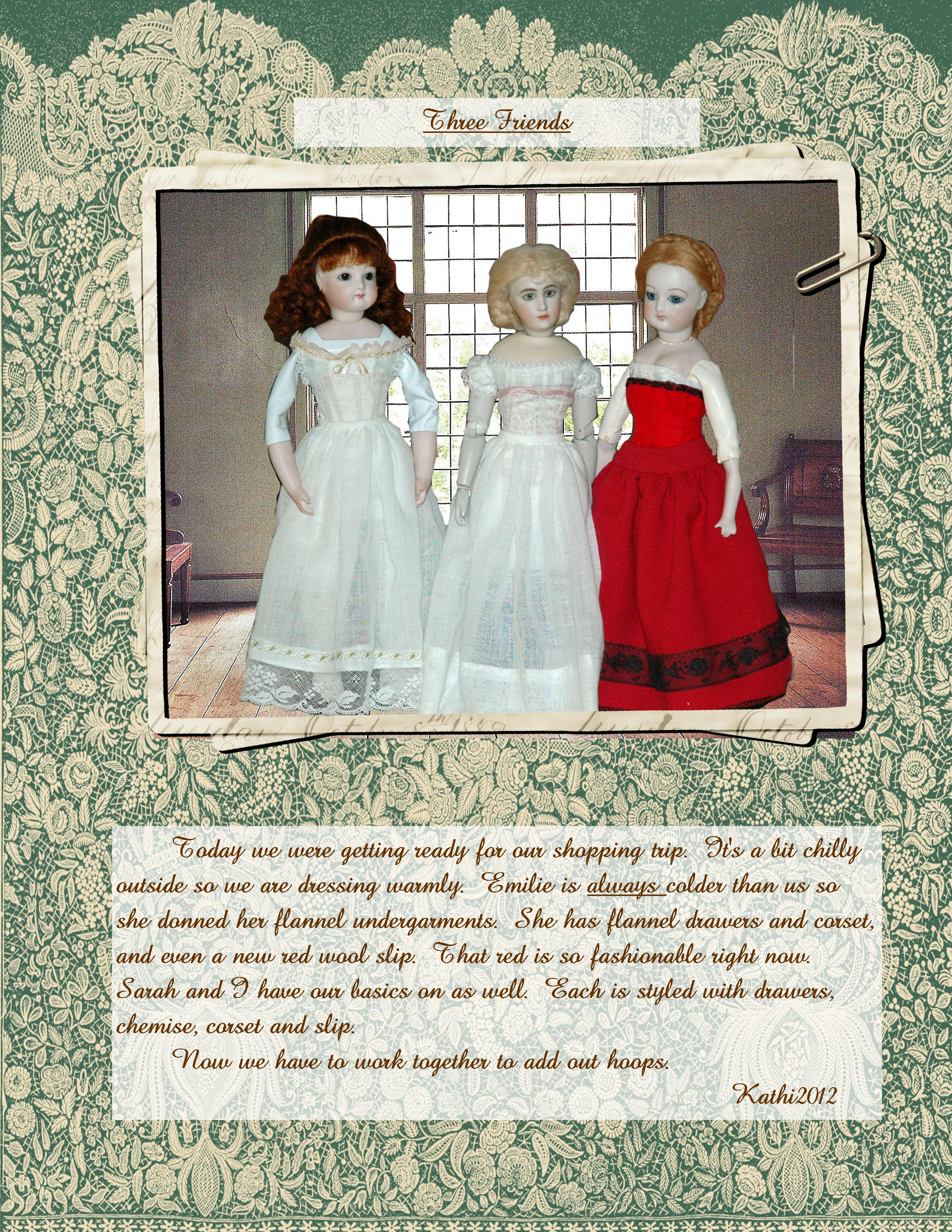
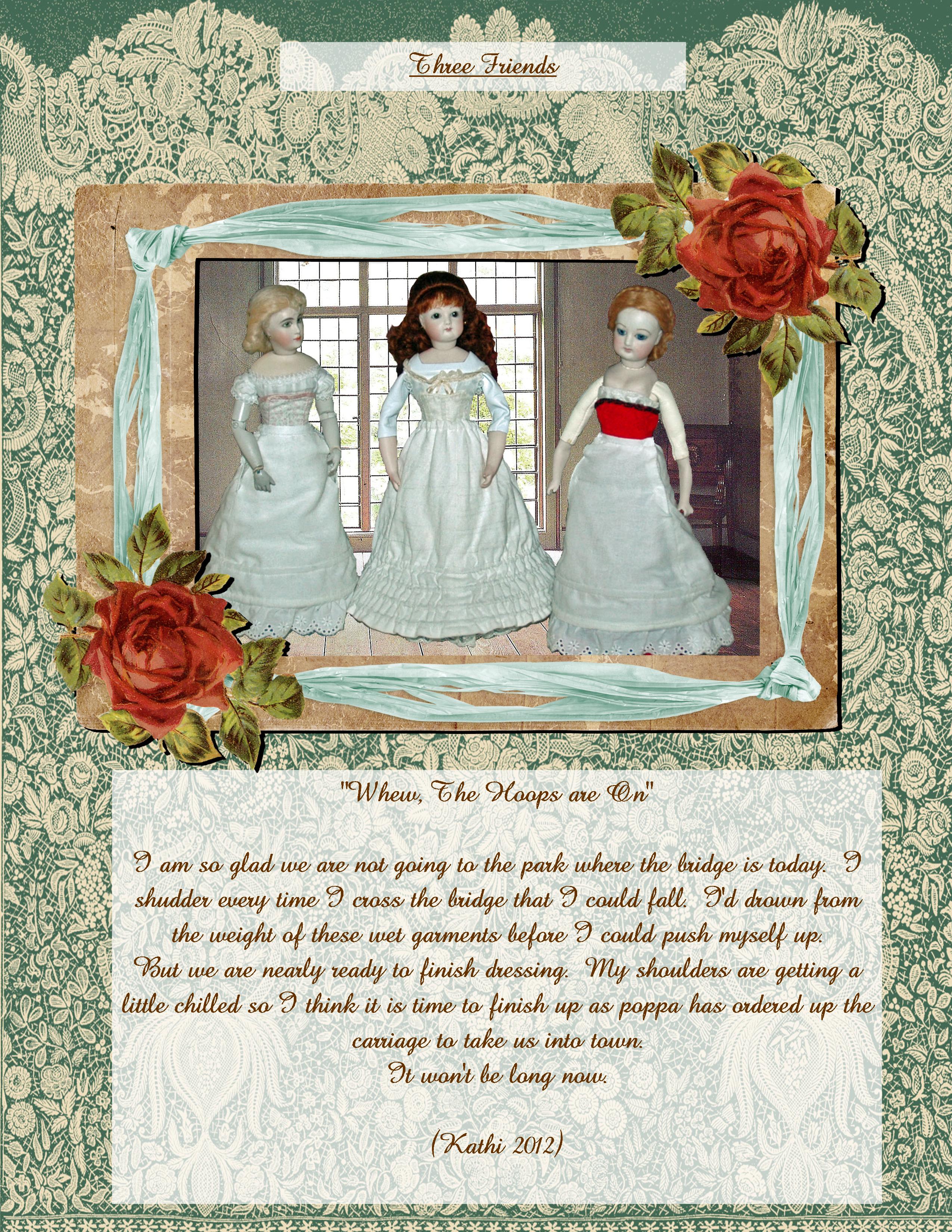
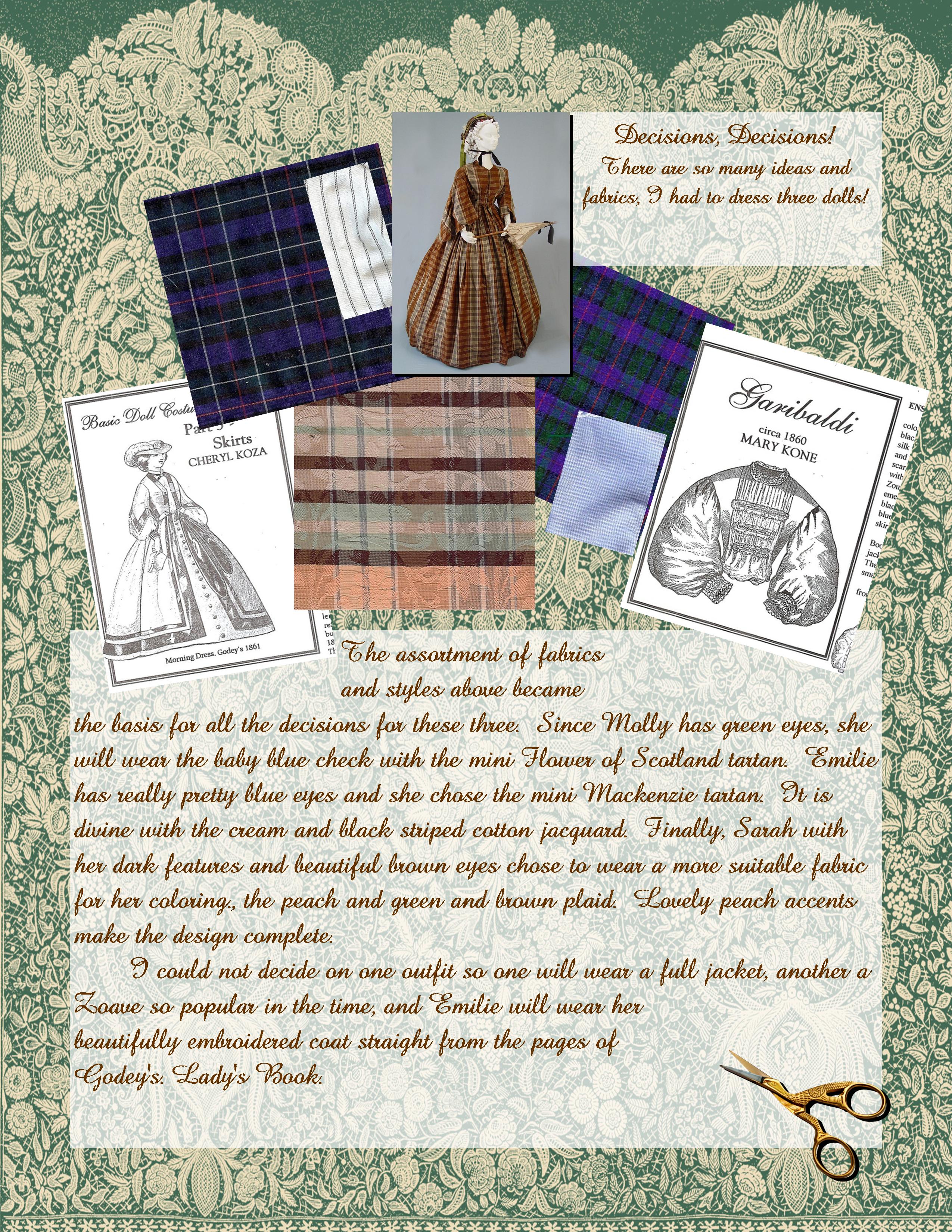
Three Friends Continued....

Want to view it Larger? Click Here

Friday, February 17, 2012

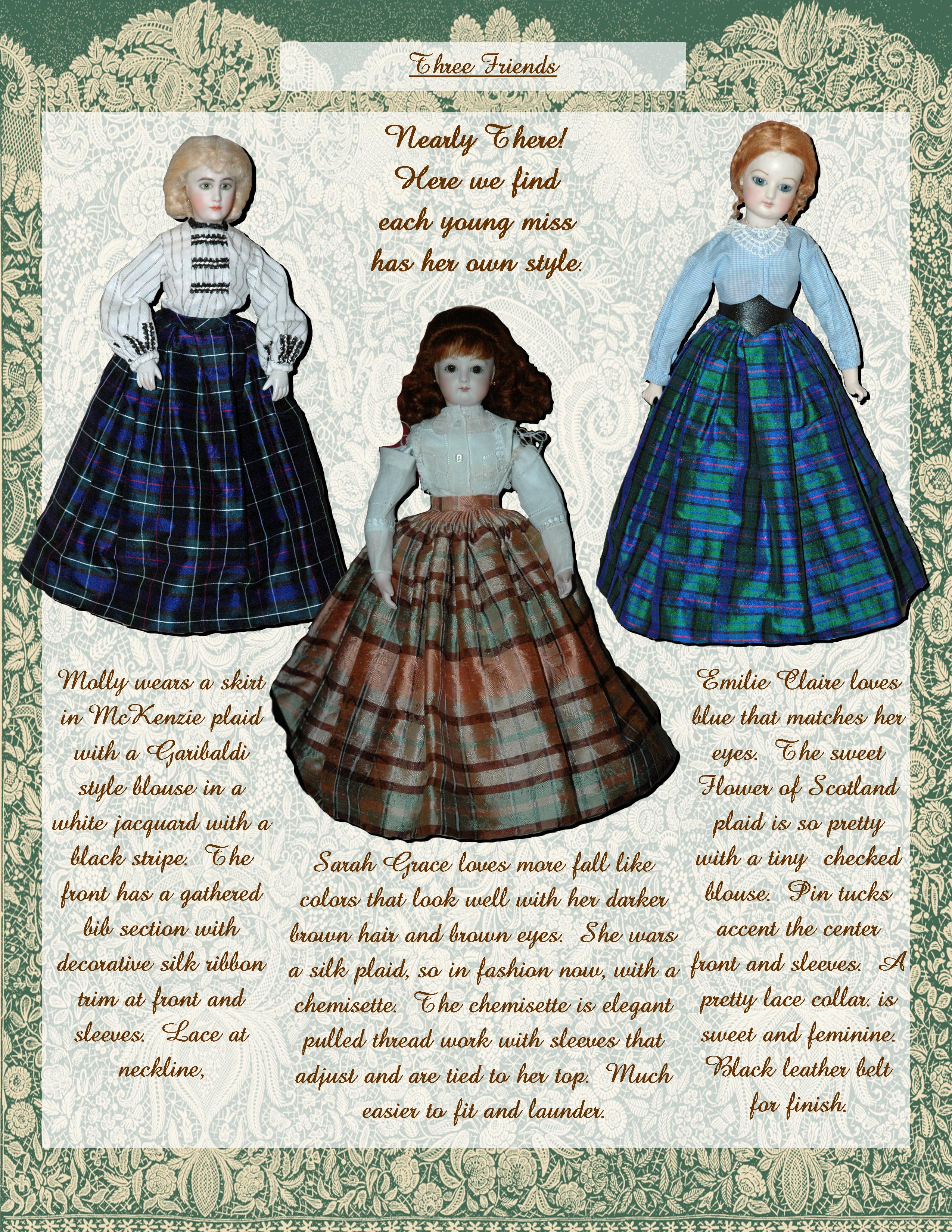
Three Friends

Want to view it Larger? Click Here

Three Friends Part 5

To view larger click HERE

Tuesday, January 31, 2012

Three Friends Part 4

Want to view it Larger? Click Here

Friday, May 28, 2010

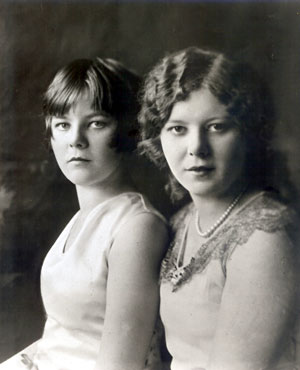
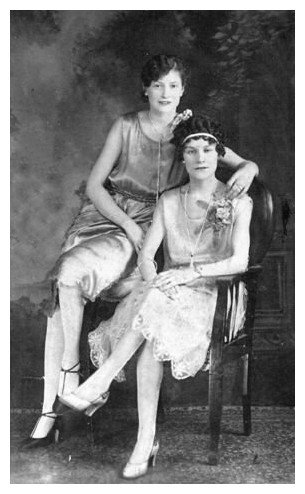
Fashions of the 1920's

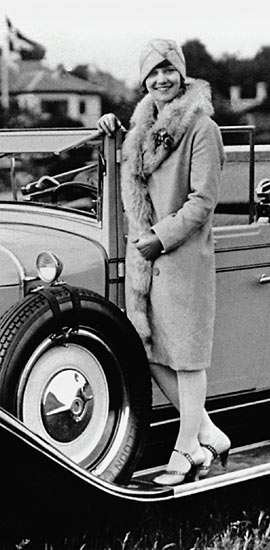
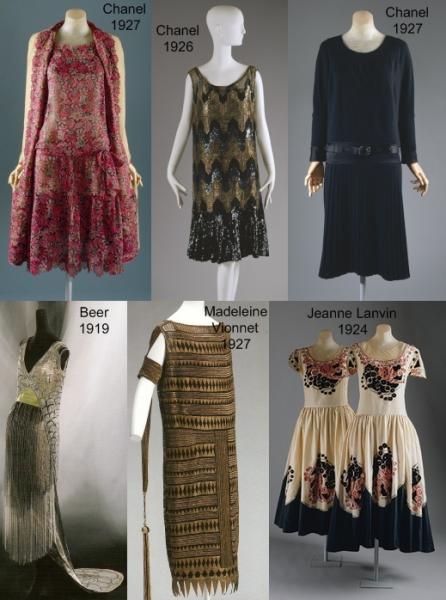
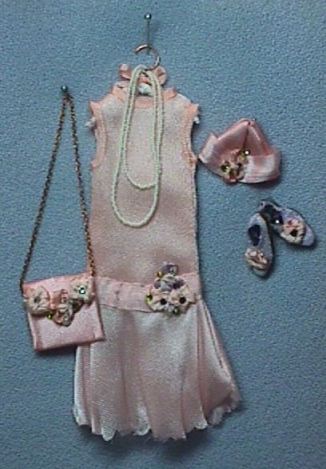
When you think of the 20's your mind immediately goes to the Flapper. But the Flapper style did not actual begin until 1926. The fashionable Flapper had short smooth sleek hair, a shapeless shift type dress and a flat chest.
After the first world war the styles for women became considerable more "mannish". Female dress became loser and less fitted. The bustline was suppressed by special designed Brassieres. One knows as the Symington Side Lacer. It laced on the sides so that it could be tightened for a flattening effect. The Miracle Reducing Rubber Brassiere gave the "desirable flat lines" sought after by young women in the 20s. It was paired with the Miracle Reducing Rubber Reducer, which molded the lines of the figure while reducing it. The garment was "scientifically designed without bones or lacings."
It is a common misconception that Hems were short throughout the 20's. Actually hem began to creep up to show a bit of the ankle in 1913. In 1918 hems were just below mid calf. Also around 1918 even thought length remained the same, at the calf, the waist actually dropped. Gradually the skirt lengths on dresses gave the illusion of being first long and then shorter with dipping, scalloped and handkerchief hemlines in floating fabrics. It was only in 1925 that skirts rose 14 to 16 inches from the ground making the shorter hemline we associate with the era.
During this era was the first time there was a sense of nudity in stockings and arms were bare.
Fashion also became more accessible at this time. The lines were simplified thus making it easier for the home sewer to create her own styles.
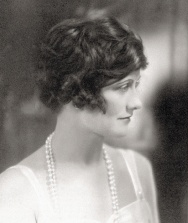
You cannot mention the 20's without talking about Coco Chanel (pictured below in 1920). From her first millinery shop, opened in 1912, to the 1920s, Gabrielle 'Coco' Chanel rose to become one of the premier fashion designers in Paris, France. Replacing the corset with comfort and casual elegance, her fashion themes included simple suits and dresses, woman's trousers, costume jewelry, perfume and textiles. Soon Coco Chanel was expanding to couture, working in jersey, a first in the French fashion world. By the 1920s, her fashion house had expanded considerably, and her chemise set a fashion trend with its "little boy" look. Her relaxed fashions, short skirts, and casual look were in sharp contrast to the corset of previous decades. Chanel herself dressed in mannish clothes, and adapted these more comfortable fashions which other women also found liberating.
Coco Chanel introduced her signature cardigan jacket in 1925 and signature "little black dress" in 1926. Most of her fashions had a staying power, and didn't change much from year to year -- or even generation to generation.
The Cloche Hat is a fitted, bell-shaped hat that was popular during the 1920s. If you were a cloche hat you told everyone you had short hair. It was only possible to get this style of hat to fit well if you have very short flat hair. It was essential that it cover the forehead. Foreheads were unfashionable at the time. This stykle of hat was very popular and continued to be worn and evolve into the 30's.
Michelle minidolls.com Doll Artist's Workshop

Pattern #2003 by Kathi Mendenhall La Petite Bell Patterns

Thursday, March 19, 2009

The Edwardian Era, 1901-1910

The Edwardian period or Edwardian era in the United Kingdom is the period covering the reign of Edward VII of the United Kingdom King Edward VII, 1901 to 1910. The death of Queen Victoria in January 1901 and the succession of her son, Edward, marked the start of a new century and the end of the Victorian period.

The Edwardian period was also known as the meaning beautiful era. Despite its short pre-eminence, the period is characterized by its own unique architectural style, fashion, and way of life. Art Nouveau held a particularly strong influence.

The Silhouette after 1890
The bustle disappeared from day dresses and the new day skirt style was flared smoothly over the hips from a handspan waist and then gradually widened at the hemline.

With the decline of the bustle, sleeves began to increase in size and the 1830s silhouette of an hourglass shape became popular again. The fashionable silhouette in the early 1900s was that of a mature woman, with full low bust and curvy hips. The "health corset" of this period removed pressure from the abdomen and created an S-curve silhouette. By 1895 the leg of mutton sleeves swelled to gigantic proportions and were also used on décolleté evening dresses. The size of the sleeves was highlighted by the comparison of the tiny sashed or belted waist against the simple gored skirt that flared out all round to balance the massive sleeve heads.

In 1897, the silhouette slimmed and elongated by a considerable amount. Blouses and dresses were full in front and puffed into a "pigeon breast" or monobosom shape of the early 20th century that looked over the narrow waist, which sloped from back to front and was often accented with a sash or belt. Necklines were supported by very high boned collars.

Skirts brushed the floor, often with a train, even for day dresses, in mid-decade.

Around 1908, the fashion houses of Paris began to show a new silhouette, with a thicker waist, flatter bust, and narrower hips. By the end of the decade the most fashionable skirts cleared the floor and approached the ankle. The overall silhouette narrowed and straightened, beginning a trend that would continue into the years leading up to the Great War.

Hairstyles and Hats
Huge, broadbrimmed hats were worn in mid-decade, trimmed with masses of feathers and occasionally complete stuffed birds, or decorated with ribbons and artificial flowers. Masses of wavy hair were fashionable, swept up to the top of the head (over horsehair pads called "rats" if necessary) and gathered into a knot. Large hats were worn with evening wear.

By the end of the decade, hats had smaller drooping brims that shaded the face and deep crowns, and the overall top-heavy effect remained.

Orientalism in Dress
During the early years of the 1910s the fashionable silhouette became much more lithe, fluid and soft than in the 1900s. When the Ballets Russes performed Scheherazade in Paris in 1910, a craze for Orientalism ensued. The couturier Paul Poiret was one of the first designers to translate this vogue into the fashion world. Poiret's clients were at once transformed into harem girls in flowing pantaloons, turbans, and vivid colors and geishas in exotic kimono. The Art Nouveau movement began to emerge at this time and its influence was evident in the designs of many couturiers of the time. Simple felt hats, turbans, and clouds of tulle replaced the styles of headgear popular in the 1900s. It is also notable that the first real fashion shows were organized during this period in time, by the first female couturier, Jeanne Paquin, who was also the first Parisian couturier to open foreign branches in London, Buenos Aires, and Madrid.

Michelle Mahler, Doll Artist's Workshop, minidolls.com